If you're in Britain and wondering whether Lyme disease is something you can actually catch here, or how to be tested, or why a negative result doesn't sit right with how you feel — this page is for you. It gathers what is specific to the UK: the risk, the NHS and NICE pathway, and the gaps patients keep falling into. For the illness itself — the symptoms, the co-infections, the treatment debates — it links you through to the deeper guides that apply wherever you live.
Plenty of people in the UK are told, in good faith, that their blood test was negative and there's nothing more to look into.
If that's happened to you and your body is still telling a different story, you're not being difficult and you're not imagining it. A negative test is not the end of the conversation — and this page will show you why.
Yes, Lyme disease is in the UK — and it's under-counted
Infected ticks are found in every county of the UK. The species that matters here is Ixodes ricinus, the sheep or castor-bean tick. On average around 4% of ticks in England and Wales carry the bacteria, rising to roughly 8–10% in some areas.
Officially, there are somewhere in the region of a thousand to fifteen hundred laboratory-confirmed cases a year in England and Wales. But that figure badly understates reality, for a specific reason: many people are diagnosed clinically — on the strength of a bullseye rash — without ever having a lab test, and those cases don't appear in the numbers at all. Lyme disease is also not a formally notifiable illness for doctors here, so the true burden is genuinely unknown. When you read "1,500 cases", read it as a floor, not a ceiling.
Ticks are everywhere, but some areas carry more risk: the Scottish Highlands, the South and South West of England, and parts of East Anglia are repeatedly flagged. In recent years most confirmed cases have come from the South West, South East and London. Risk peaks from late spring through summer — but ticks can be active in mild weather almost year-round.
How diagnosis works on the NHS
Britain's official guidance — the NICE guideline NG95 — is, in several respects, more sensible than patients expect. Two parts are genuinely worth knowing, because they're on your side:
If you have the classic spreading "bullseye" rash (erythema migrans), NHS guidance is to diagnose and treat you on sight, without waiting for any blood test. Antibody tests can even be falsely negative while the rash is present, so testing is not required. If a doctor insists on a test before treating an obvious EM rash, that runs against the guidance.
If there's no rash, the route is a blood test: a two-step antibody process (an initial ELISA, then an immunoblot to confirm), carried out at an NHS or UKHSA laboratory. Antibodies take time to build, so a test done too early can come back negative — which is why guidance allows repeating it on a fresh sample a few weeks later.
NICE explicitly says a negative test should not rule out Lyme disease when clinical suspicion is high. If you've been told "the test was negative, so it isn't Lyme," that is not what the national guideline actually says. It's worth knowing — and worth quoting back.
Where UK patients still fall through the gaps
So if the guidance is reasonable, why do so many people here feel abandoned? Because guidance on paper and experience in the clinic are two different things — and there are real limits even in the best case.
The two-tier antibody testing misses cases, particularly early on and in people whose immune response is atypical. And once someone has had the standard course of antibiotics but remains unwell, NHS medicine has very little to offer: persistent or "chronic" symptoms after treatment are contested and poorly served, and many patients are effectively told there is nothing more to be done. That is the gap — not usually a lack of care, but a system with no settled answer for people who don't get better on schedule.
It's the reason many UK patients turn to private testing, sometimes through overseas laboratories. Here honesty cuts both ways: the UK authorities caution that some private tests and clinics are unreliable and not backed by the scientific mainstream — and that caution isn't baseless. But it's equally true that people rarely go looking for private options until the standard route has left them stuck. If that's you, the aim of this site is to help you understand the options well enough to make your own informed decisions, rather than choosing out of desperation.
One more honest word, about time. Most people, reasonably, give the system every chance first — and that isn't naïve; it's how it's meant to work. But it does mean many spend years moving between GPs and specialists who simply aren't looking for Lyme, long before they think to look wider. Knowing that pattern in advance won't change your first step, but it may spare you some of those lost years — by prompting you to document everything, advocate harder, and widen your search sooner if you stay stuck.
Finding help in the UK
Start with your GP — and walk in prepared, because a short appointment rewards clarity. Bring a written timeline, note any tick exposure or rash (with photos), and, if a clear EM rash is involved, know that you're entitled to treatment without a test. If you're not being heard, you can ask for decisions to be recorded and seek a second opinion.
Doctors who specialise in complex or persistent tick-borne illness are scarce in the UK, which is where remote and private consultations come in for some people. This is exactly the terrain — how to be taken seriously, how to find a knowledgeable practitioner, and why some of the most useful people aren't infectious-disease consultants at all — that the finding-care guide covers in depth.
Britain's herbal tradition — a genuine asset
Here is something the UK has that many places don't: a long, living tradition of herbal medicine, with a professional body of trained practitioners behind it. When the conventional route stalls — as it so often does with persistent tick-borne illness — this is a real avenue worth understanding, not a last resort.
Qualified medical herbalists here are represented by the National Institute of Medical Herbalists (NIMH), founded in 1864 and the oldest and largest professional register of herbalists in the world. Its members — you'll see the letters MNIMH or FNIMH after their name — complete degree-level training in the medical sciences alongside herbal medicine, follow a code of ethics, and carry professional insurance. NIMH runs a "Find a Herbalist" service, so you can locate a registered practitioner near you or consult remotely.
The tradition runs deep and is still very much alive. Long-established herbal dispensaries such as Napiers in Edinburgh — Scotland's oldest apothecary, trading since 1860 — still run herbal-medicine clinics and remote consultations with NIMH-accredited herbalists, and some UK herbal clinics now focus specifically on recovery from chronic bacterial and viral illness. This connects directly to a point made in the finding-care guide: some of the most knowledgeable and compassionate help comes from people who have walked this road themselves — and experienced medical herbalists are often exactly that.
Two cautions worth holding together. First, look for genuine expertise — a registered medical herbalist (MNIMH or FNIMH) with real experience of tick-borne illness, not just anyone selling herbs online. Second, herbs are medicine, not seasoning: they can interact with prescriptions and matter before surgery, so tell your doctors what you're taking, buy from reputable sources, and treat this as a complement to conventional care rather than a replacement for what genuinely needs a doctor. For the approaches themselves, see the herbal treatment and Buhner protocol guides.
The UK is unusually well-stocked for self-support
One quiet advantage of being in Britain: the raw materials for supporting your own recovery are genuinely easy to come by. Fresh whole foods, anti-inflammatory staples like fresh turmeric, linseed (flaxseed) and black seed (Nigella sativa), and a wide range of herbs are all within reach of an ordinary shop or market.
The land helps too. British meadows, hedgerows and woodlands are full of useful plants, and with proper knowledge you can gather and make your own supportive teas and tinctures. Online, too, there's no shortage of supplements aimed at detoxification and recovery support.
Two rules keep this safe and worthwhile. First, identification matters: some wild plants are toxic or have dangerous lookalikes, so never gather anything you can't identify with certainty, and learn from someone who knows. Second, "natural" doesn't mean harmless or automatically effective — supplement quality varies enormously, some herbs interact with medication, and marketing runs well ahead of evidence. Treat all of this as support for your body, not a cure for the infection, and keep the people caring for you in the loop. For the practical detail, see the diet & nutrition, immune support and herbal treatment guides.
Ticks and prevention, UK-style
Tick season runs mainly from spring through autumn, peaking around June, with Lyme cases peaking in late summer. The UK Health Security Agency runs a "Be Tick Aware" campaign and a Tick Surveillance Scheme you can contribute to by posting in a tick you've found — though note they don't test it for infection, and a tick test shouldn't be used to decide your own treatment. The practical measures — repellents, permethrin-treated clothing, the daily tick check — are the same everywhere, and are covered in full in the prevention guide.
UK organisations worth knowing
Two UK charities are genuinely useful for patients: Lyme Disease UK, which runs the annual awareness campaign each May and offers plain-language patient information, and the Caudwell LymeCo Charity, which produces practical, well-referenced guides including how to work with your doctor. For the clinical framework, the NICE guideline NG95 and the RCGP Lyme Disease Toolkit are what UK doctors are meant to follow — useful to know, and useful to cite.
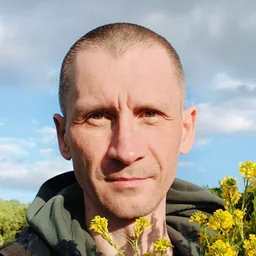
I've been connected to the UK for many years, and I've sat in a GP surgery here myself. I had the ELISA blood test done twice. Both times it came back borderline — technically negative, but not quite clean. On paper, case closed.
That experience is exactly why this page keeps repeating one line: a negative or borderline result does not settle the question. I'm not a doctor, and I'd never tell you to distrust the NHS wholesale. But if your result looked anything like mine, and your body is still telling a different story, you're not imagining it — and you're not out of options.
Understand the illness itself
Frequently asked questions
Yes. Infected ticks are found in every county of the UK, with higher risk in the Scottish Highlands, the South and South West of England and parts of East Anglia. On average around 4% of ticks in England and Wales carry the bacteria, rising to roughly 8–10% in some areas.
A clear “bullseye” (erythema migrans) rash is diagnosed and treated on sight, without a blood test. If there is no rash, the NHS uses a two-step antibody blood test — an ELISA followed by an immunoblot. Because antibodies take time to develop, an early test can be negative and may be repeated on a fresh sample a few weeks later.
No. The NICE guideline (NG95) states that a negative test should not rule out Lyme disease when clinical suspicion is high. A negative or borderline result does not close the question on its own.
Yes. The UK has a long tradition of herbal medicine and a professional register of qualified medical herbalists through the National Institute of Medical Herbalists (NIMH); members use the letters MNIMH or FNIMH. Look for a registered, experienced practitioner, mind interactions with any medication, and treat it as a complement to medical care rather than a replacement.
Higher-risk areas include the Scottish Highlands, the South and South West of England and parts of East Anglia, though infected ticks occur across the country. Risk rises through spring and summer, peaking around June, with Lyme disease cases peaking in late summer.
In Ireland instead? See the guide to Lyme disease in Ireland — the HSE route, the surveillance gap, and Ireland's herbal tradition.
Sources & further reading
- NICE — Lyme disease (NG95), guideline on diagnosis and management, nice.org.uk/guidance/ng95
- UK Health Security Agency (UKHSA) — What is Lyme disease and how is it diagnosed and treated; Lyme disease data dashboard and One Health surveillance reports, gov.uk / ukhsa.blog.gov.uk
- UKHSA — Tick Surveillance Scheme and "Be Tick Aware" guidance, gov.uk
- NHS — Lyme disease, nhs.uk/conditions/lyme-disease
- Lyme Disease UK — patient information and awareness campaign, lymediseaseuk.com
- Caudwell LymeCo Charity — patient guides, including working with your doctor
- National Institute of Medical Herbalists (NIMH) — register of qualified medical herbalists and "Find a Herbalist" service, nimh.org.uk
- Napiers the Herbalists — long-established Edinburgh herbal dispensary and clinics (est. 1860), napiers.net
- Royal College of General Practitioners (RCGP) — Lyme Disease Toolkit
Last updated: July 2026