There is a hard truth at the centre of this topic: the medical system too often makes Lyme disease harder to diagnose and treat, not easier. Many patients are dismissed, mislabelled, or told their tests are fine when they are not. None of that is your fault — but it does mean you have to walk in prepared, and it means knowing where else to turn if the door in front of you stays shut.
If you've already sat across from a doctor who told you it was stress, or anxiety, or nothing at all — while your body was clearly telling you otherwise — you know how lonely that moment is.
You are not imagining it, and you are not the problem. What follows is how to give yourself the best possible chance of being believed, and what to do if you still aren't.
Walk in prepared — the burden, unfairly, is on you
Appointments are short, and a complex history is easy to lose in ten minutes. The more you organise beforehand, the harder you are to dismiss. Bring it written down, not just in your head:
A dated timeline of when symptoms began and how they changed. A concise symptom log — what, when, how severe. Any exposure history: time outdoors, tick bites, travel, a rash if there was one, ideally with photographs. And copies of previous test results, so nobody has to take your word for what was or wasn't done.
Open with one or two clear sentences that summarise your situation, then hand over your written timeline. Ask specific, answerable questions rather than open ones — "Could this be a tick-borne infection, and what would it take to rule it in or out?" is harder to wave away than "What's wrong with me?" If you can, bring someone with you; a second person makes dismissal less likely and helps you remember what was said.
How to be heard, not dismissed
Lead with facts and your timeline rather than fear alone — not because your fear isn't valid, but because documentation is harder to dismiss than distress. Be concise and specific. If a doctor declines to test or treat, you can politely ask them to note that decision in your records; this is reasonable, and it tends to focus minds.
And if you still leave feeling unheard, hold onto this: a clinician's disbelief is not a verdict on your body. It is a limit of that clinician, in that appointment. It does not mean there is nothing wrong, and it does not mean you are out of options.
Finding a Lyme-literate doctor (LLMD)
A Lyme-literate physician — often called an LLMD — or an integrative specialist experienced in tick-borne disease will approach your history differently from a doctor who sees Lyme as rare and simple. They tend to take exposure, co-infections, and persistent symptoms seriously rather than stopping at a single negative test.
Starting points: the ILADS physician referral network, established Lyme patient organisations and their communities, and word of mouth from people who have been through it. In the United States there is a relatively larger network of such physicians; elsewhere they can be scarce, which is where remote and telemedicine consultations become genuinely useful — a good practitioner two countries away may help more than a dismissive one down the road.
Widen your circle — help isn't only found in a doctor's office
Here is something worth saying plainly: a Lyme-literate doctor can be very hard to find. If the search stalls, it is worth looking wider — both locally and remotely — for other kinds of practitioners who understand this territory.
In particular, look at medical herbalists and phytotherapists, and practitioners like experienced physiotherapists and integrative therapists. It is often within this group — medical herbalists and phytotherapists especially — that you find some of the deepest practical knowledge of Lyme, co-infections and parasites. Many of them arrived at this work because they were seriously ill themselves, found their own way back, and carry that hard-won understanding. Someone with an authentic story of recovery can be far more compassionate and reliable than an infectious-disease specialist who simply doesn't believe you're infected.
Use discernment. The value is in genuine, deep, demonstrable experience and a real track record — not in a certificate or a good story alone. And think of this as widening your circle of support, not abandoning medicine: some things still need a doctor — prescriptions, urgent problems, and ruling out other serious conditions. The goal is to surround yourself with people who take you seriously and know the terrain, from wherever they come.
The second opinion
If you feel your situation is not being adequately addressed, you are entitled to seek a second opinion — and doing so is not disloyal or dramatic. A second opinion does not replace your current clinician; it adds a more detailed map of a complex territory. Sometimes the most important thing a second set of eyes gives you isn't a new prescription, but the simple confirmation that you were right to keep asking.
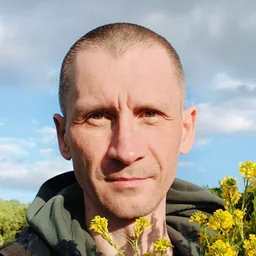
Some of the people who helped me most weren't infectious-disease specialists at all. They were practitioners who had been seriously ill themselves, found their own way through, and carried that hard-won knowledge — often medical herbalists and phytotherapists who genuinely understood Lyme, co-infections and parasites.
I'm not telling you to walk away from doctors; some things need one. But a specialist who doesn't believe you're infected can't help you — and someone who has lived this often can. Look for real experience and a real track record, wherever you find it.
Your next step
In Britain? See the local guide to Lyme in the UK — how the NHS and NICE pathway works, and exactly where patients get stuck.
Sources & further reading
- ILADS — International Lyme and Associated Diseases Society: physician referral and patient resources, ilads.org
- ILADEF — Education Foundation: patient guidance on tick-borne disease, iladef.org
- LymeDisease.org — Finding and working with a Lyme doctor, lymedisease.org
- Caudwell LymeCo Charity — Working with your doctor (UK)
- National Institute of Medical Herbalists (NIMH) — Finding a qualified medical herbalist, nimh.org.uk
Last updated: July 2026