If you're in Ireland and wondering whether Lyme is really a risk here, how to get tested through the HSE, or why the numbers seem so low when so many people are unwell — this page is for you. It gathers what's specific to Ireland, including a herbal-medicine tradition that is one of the country's quiet strengths, and links you through to the deeper guides that apply wherever you live.
Ireland's official Lyme figures are small — but that's largely because of how cases are counted, not because the illness is rare.
If you've been unwell here and sense you've slipped through a gap, you're probably right. Understanding how that gap works is the first step to getting around it.
Lyme disease is in Ireland — and badly under-counted
Ticks are found everywhere in Ireland, in both urban and rural settings — parks, heathland, light woodland and grassy areas — carried by deer, sheep and other animals. The species that matters is Ixodes ricinus, and it's active from spring through autumn, most numerous in summer.
Here's the crucial local quirk. In Ireland, only the severe neurological form — Lyme neuroborreliosis — is a notifiable disease, reported to the HSE's Health Protection Surveillance Centre (HPSC). That's roughly 10–20 cases a year. Every milder case of Lyme simply isn't counted. The HPSC itself estimates several hundred milder cases annually, and independent researchers, extrapolating from Irish tick data, have suggested the true figure could run into the thousands. In other words, the official number is a tiny, unrepresentative slice of the real picture.
Because only neuroborreliosis is notifiable, Ireland has no real count of ordinary Lyme disease. If you've ever been told "Lyme is very rare in Ireland," that statement rests on a number that was never designed to measure it. Rare on paper is not the same as rare in reality.
How diagnosis works through the HSE
Diagnosis usually starts with a GP, based on your history and examination. As elsewhere, a classic "bullseye" rash (erythema migrans) can be diagnosed and treated on its own, without waiting for a blood test.
If there's no rash, Irish laboratories use the standard two-tier antibody method — an initial screening test (EIA/ELISA), and reactive samples are then sent for confirmation to the UK reference laboratory (the Rare & Imported Pathogens Laboratory at Porton Down). Testing and treatment are available through the main hospitals, and Ireland has a small number of infectious-disease specialists nationally.
Two-tier antibody testing shares the same limitation the world over: antibodies take time to appear, so an early test can be negative, and the tests miss a proportion of genuine cases. A negative result early on, or in an atypical presentation, does not rule Lyme out — it's a piece of the picture, not the verdict.
Where Irish patients fall through the gaps
The surveillance gap has a real-world echo in the clinic. Because ordinary Lyme is invisible in the statistics, awareness can lag, and people with vague, multi-system symptoms — fatigue, joint pain, neurological complaints — are easily attributed to something else. Ireland's own health bodies acknowledge that establishing a diagnosis and managing chronic ill health is very difficult for those affected.
And, as elsewhere, once someone has completed a standard course of antibiotics but remains unwell, the conventional system has little more to offer. That's the point at which many Irish patients start looking further afield — to private clinics, to practitioners in the UK or mainland Europe, or to Ireland's own herbal tradition. One honest word about time: most people, understandably, give the system every chance first. That isn't naïve — but it does mean many spend a long while being passed between GPs and specialists before they think to look wider. Knowing that in advance can spare you some of those lost months.
Finding help in Ireland
Start with your GP, and go in prepared: a written timeline, any tick exposure or rash (with photos), and previous results. If a clear bullseye rash is involved, you're entitled to treatment without a test. If you're not being heard, you can seek a second opinion — there are doctors in Ireland, including some private and integrative practitioners, who take tick-borne illness seriously, alongside the hospital infectious-disease services.
Irish patient-advocacy groups (such as Tick Talk Ireland) can be a useful source of shared experience and signposting. And the wider question — how to be taken seriously, how to find a knowledgeable practitioner, and why some of the most useful people aren't infectious-disease consultants at all — is covered in depth in the finding-care guide.
Ireland's herbal tradition — a real advantage
This is where Ireland genuinely stands out. The country has a proud, long-standing tradition of herbal medicine, rooted in the old Irish and Celtic use of native plants, and it is very much alive today. Ireland is, after all, one of the greenest places on earth — its meadows, hedgerows and hills are full of the very plants this tradition draws on.
That tradition is carried by respected training schools — the Irish School of Herbal Medicine, for instance, teaches clinical practice with a particular emphasis on native Irish herbs — which have produced many highly regarded medical herbalists, a number of whom are genuinely Lyme-literate and experienced with chronic infection. You can find registered practitioners through professional bodies: the Irish Register of Herbalists (IRH), the all-Ireland body whose members use the letters M.I.R.H. and who appear on its "Find a Herbalist" listing; the Irish Association of Master Medical Herbalists; and the Irish Institute of Medical Herbalists, whose members meet a high clinical standard — with some consultations even covered by private health insurance.
This connects directly to a theme running through this whole site: some of the most knowledgeable and compassionate help comes from practitioners who have walked the road of illness themselves. In Ireland's herbal community, that kind of person is not hard to find.
The same two cautions apply as anywhere. Look for genuine, registered expertise — a herbalist listed with a recognised body (for example M.I.R.H.), ideally with real experience of tick-borne illness — rather than anyone selling remedies online. And remember that herbs are medicine: they can interact with prescriptions and matter before surgery, so keep your doctors informed, buy from reputable sources, and treat this as a complement to conventional care, not a replacement for what genuinely needs a doctor. For the approaches themselves, see the herbal treatment and Buhner protocol guides.
Ticks and prevention in Ireland
Because ticks are found across Ireland — including city parks, not just the hills — anyone spending time outdoors is worth protecting. The HSE runs a "Be Tick Aware" campaign; the practical measures are the same everywhere: repellents, permethrin-treated clothing for those out in tick country, and a daily tick check after time outside. Ticks are active from spring to autumn and peak in summer, so that's when to be most vigilant. The full detail is in the prevention guide.
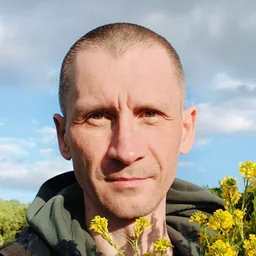
Ireland is especially dear to me — so green, so full of herbs. I remember long walks through Dublin and Cork during a hard stretch of my life, when I was dizzy and my face kept tingling, and I couldn't work out why.
I didn't know it yet, but I was walking those streets carrying Lyme disease — with no idea that one day I'd uncover that secret, or that I'd end up writing this. If you're on those same streets now, sensing something is wrong and not knowing what, I've been exactly where you are.
Frequently asked questions
Yes. Ticks are present across Ireland in both urban and rural settings — parks, heathland, light woodland and grassy areas — and are active from spring to autumn. Because only the severe neurological form is officially counted, the real number of cases is far higher than the published figures suggest.
A clear bullseye (erythema migrans) rash is diagnosed and treated without a blood test. Otherwise, Irish laboratories use two-tier antibody testing — an initial screening test, with reactive samples confirmed at the UK reference laboratory at Porton Down. Testing is available through the main hospitals.
Only Lyme neuroborreliosis (the severe neurological form) is notifiable in Ireland, at around 10–20 cases a year. Milder Lyme disease is not counted at all, so the official figures dramatically understate the true burden — likely several hundred to a few thousand cases a year.
Yes. Ireland has a long herbal-medicine tradition and registered practitioners through bodies such as the Irish Register of Herbalists (members use M.I.R.H.). Look for a registered, experienced practitioner, mind interactions with any medication, and treat it as a complement to medical care rather than a replacement.
No. Two-tier antibody testing can be negative early in infection or in atypical cases, and it misses a proportion of genuine cases. A negative result does not rule Lyme out when the clinical picture points to it.
Understand the illness itself
In Britain instead? See the guide to Lyme disease in the UK — the NHS and NICE pathway, and where patients get stuck.
Sources & further reading
- HSE Health Protection Surveillance Centre (HPSC) — Lyme disease factsheet, surveillance and "Be Tick Aware", hpsc.ie
- HPSC — Primary Prevention and Surveillance of Lyme Borreliosis in Ireland (two-tier testing; UK reference-lab confirmation)
- HSE — Lyme disease information, hse.ie
- Tick Talk Ireland — patient advocacy and information
- Irish Register of Herbalists (IRH) — all-Ireland register and "Find a Herbalist", irh.ie
- Irish School of Herbal Medicine; Irish Association of Master Medical Herbalists; Irish Institute of Medical Herbalists
Last updated: July 2026